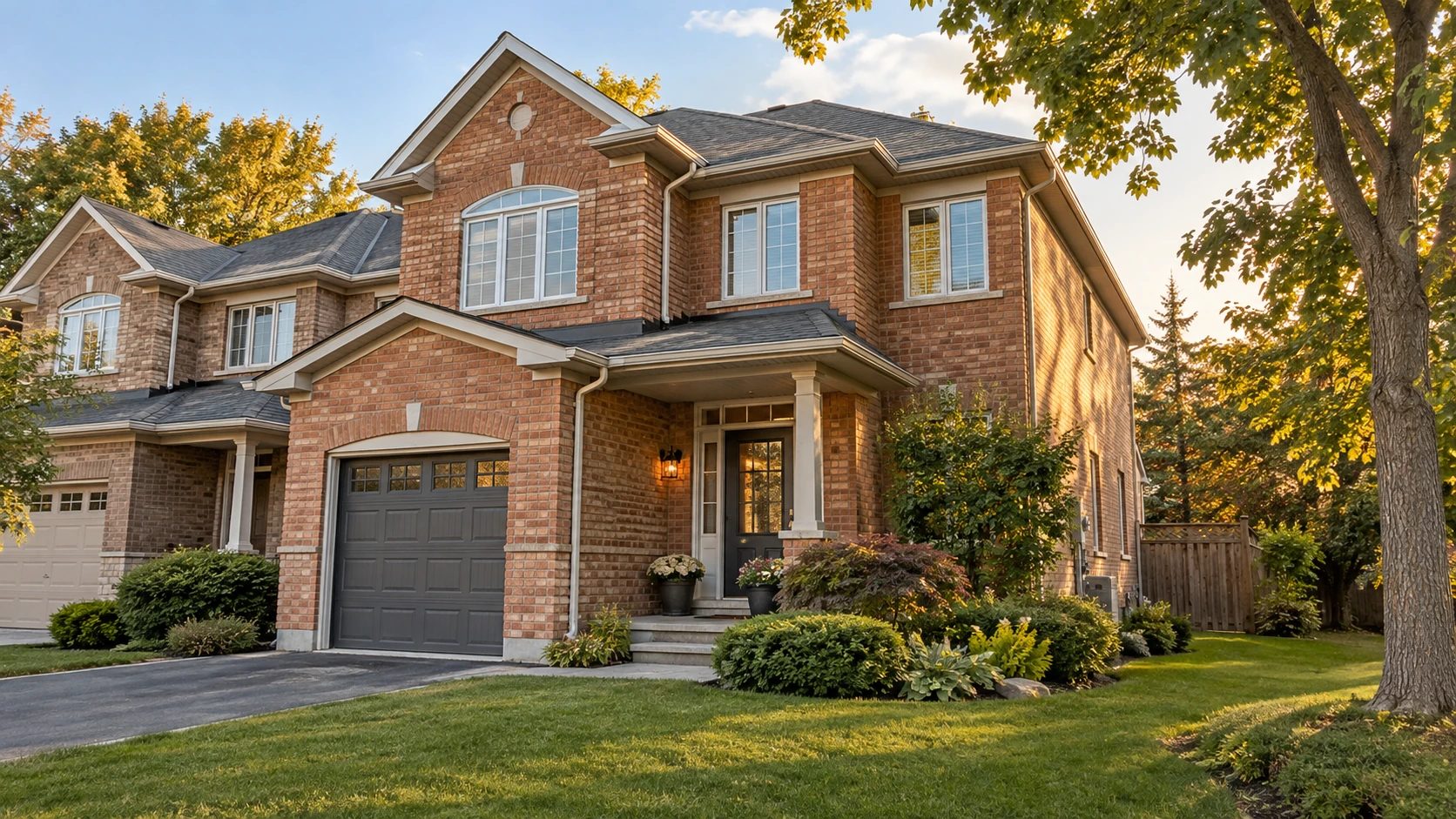
Selling a Home in Milton, Oakville or Burlington: A Step-by-Step Guide
From pricing and preparation to offers, conditions and closing day — how selling a home works in Halton Region, and how to avoid the mistakes that cost sellers money.
By Saigal Realty · · 4 min read

Selling a home in Halton Region is not one-size-fits-all. A detached home in a newer Milton subdivision competes with builder inventory down the road; a south Oakville property is judged on its lot, location and finishes; a Burlington townhouse may be compared with condos near the GO station. The basic steps are the same, but the details — and the price you get — depend on doing each step well.
Here is how the process works, step by step, from a brokerage that lists and sells homes across Milton, Oakville and Burlington.
Step 1: Know your numbers
Before you list, work out what you will actually take away. Start with a realistic price range, then subtract your mortgage balance and any prepayment penalty, the brokerage commission and HST on it, legal fees, moving costs and any repairs. If you are buying another home, this tells you your real budget for the next one. Ask your lender about porting your mortgage, and talk to an accountant if the home has not always been your principal residence.
Step 2: Get a proper home evaluation
Online estimates cannot see your renovations, your lot or your street. A good evaluation compares your home with recent sales — not asking prices — in your neighbourhood, adjusted for size, condition and features. In Milton, it also accounts for nearby new-build pricing; in Oakville and Burlington, school zones, lake proximity and age of the home often matter most. Start with our free home evaluation.
Step 3: Prepare the home
- Declutter and depersonalize so buyers can picture themselves living there
- Fix small things — dripping taps, scuffed walls, burnt-out bulbs, sticking doors
- Consider fresh neutral paint in high-traffic rooms
- Clean everything, including windows, the garage and the furnace room
- Think about a pre-listing inspection for older homes so there are no surprises
- Ask your agent whether staging makes sense for your price range and layout
Step 4: Choose your agent and sign the listing agreement
Under Ontario’s Trust in Real Estate Services Act, your listing agreement must be in writing. Read it carefully: the length of the listing, the commission and how it is shared with the buyer’s brokerage, and what happens if the brokerage also represents a buyer. Our guide to choosing a real estate agent in Milton covers the questions to ask.
Step 5: Price and launch the listing
The first two weeks on the market usually bring the most attention, so price and presentation need to be right on day one. Expect professional photos, a floor plan, a description that highlights what buyers in your area care about, and exposure on the MLS® System and REALTOR.ca. Your agent will also decide with you whether to set an offer date or accept offers at any time, depending on demand.
Step 6: Showings and feedback
Keep the home show-ready, and step out during showings so buyers can speak freely. Ask your agent to share feedback from buyer agents; if the same concern comes up repeatedly — price, a dated kitchen, a smell — it is better to address it early than to sit on the market.
Step 7: Review offers and negotiate
Price is only one part of an offer. Compare the deposit, closing date, conditions (financing, inspection, sale of the buyer’s home) and what is included with the house. A slightly lower firm offer can be stronger than a higher conditional one. If there are multiple offers, your agent will explain how they will be handled and presented to you.
Step 8: Conditions, firm deal and closing
Once conditions are waived, the deal is firm. Your lawyer will handle the title transfer, pay out your mortgage and receive the sale proceeds on closing day. In Ontario the buyer pays land transfer tax, so it is not a seller cost. Plan your move, cancel or transfer utilities and insurance, and leave the keys with your agent or lawyer as arranged.
Local notes: Milton, Oakville and Burlington
- Milton: many buyers are also touring builder model homes, so show what your resale home offers that new construction does not — finished basements, landscaping, mature trees, no wait for closing.
- Oakville: buyers pay close attention to school zones, proximity to the lake and GO stations, and the quality of renovations. Presentation matters at every price point.
- Burlington: the market ranges from downtown condos to family homes north of the QEW and rural properties near the escarpment, so comparable sales need to be chosen carefully.
Frequently asked questions
When is the best time to sell a home in Halton?
Spring is traditionally the busiest season, but there are fewer competing listings in fall and winter. The right time depends on your next move, your home and current inventory in your neighbourhood.
How long does it take to sell a house in Milton?
It varies with price, condition and the market. Check current days on market on our Milton real estate page, or ask us for the numbers for your neighbourhood.
Who pays land transfer tax when selling a home in Ontario?
The buyer pays land transfer tax. Sellers typically pay the brokerage commission plus HST, legal fees and any mortgage discharge costs.
Can I sell my house if it has tenants?
Yes, but tenants have rights under Ontario law that affect showings and vacant possession. Read our guide to selling a tenanted home in Ontario.
Thinking of selling? Get a free home evaluation, see what is on the market in Milton, Oakville and Burlington, or call Saigal Realty at (905) 876-4126.